

Largest Michigan outbreak on record raises food safety concerns as investigators search for contaminated produce
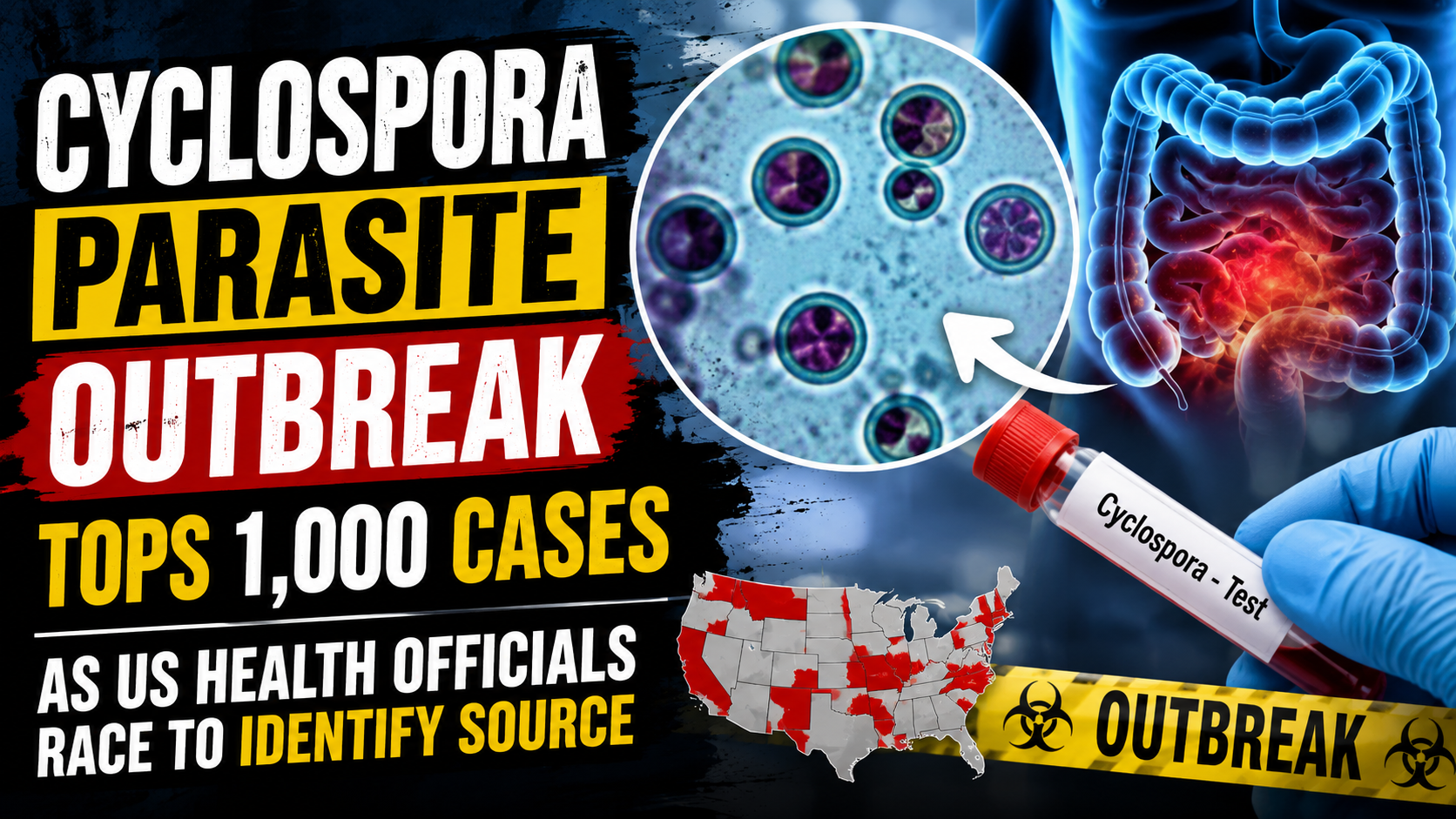
A rapidly expanding outbreak of Cyclospora, a microscopic parasite that causes prolonged diarrheal illness, has infected more than 1,000 people in the United States, with Michigan recording its largest-ever outbreak and health officials investigating similar clusters in multiple states.
The outbreak, which has resulted in approximately 40 hospitalizations but no reported deaths, has prompted an extensive investigation by state health departments alongside the U.S. Centers for Disease Control and Prevention (CDC). Authorities are working to determine whether contaminated fresh produce or another common food source is responsible, although no single source has yet been identified.
The spike in infections comes during the summer months, when Cyclospora outbreaks are historically more common due to increased consumption of fresh fruits, herbs and leafy vegetables that may be eaten raw.

Michigan Emerges as the Epicenter
Michigan has reported nearly 1,000 confirmed cases of cyclosporiasis—the illness caused by the Cyclospora cayetanensis parasite—making it the largest outbreak ever documented in the state’s history and one of the biggest seen in the United States in recent years.
State officials first identified the outbreak in late June when just over 170 infections had been confirmed. Within days, the number of reported cases surged dramatically, indicating widespread exposure rather than isolated infections.
Most patients have experienced prolonged gastrointestinal illness, and around 40 individuals have required hospitalization because of dehydration or complications associated with persistent diarrhea. Despite the growing case count, health officials said no fatalities have been linked to the outbreak.
Investigators continue tracing patients’ food histories in an effort to identify a common exposure.
Cases Reported Beyond Michigan
While Michigan remains the hardest-hit state, additional infections have been reported across neighboring Ohio and numerous other parts of the country.
Federal and state health authorities are examining several clusters of Cyclospora infections occurring simultaneously. However, investigators have cautioned that there is currently no evidence that every reported case across different states stems from a single nationwide outbreak.
Ohio, particularly counties bordering Michigan, has also recorded a sharp increase in infections, while cases have been documented elsewhere in states including Texas and New York.
Public health officials say multiple separate outbreaks linked to different food products remain a possibility.

What Is Cyclospora?
Cyclospora is a microscopic parasite that infects the small intestine and causes cyclosporiasis, an intestinal illness characterized primarily by severe watery diarrhea.
Unlike viruses that spread easily from person to person, Cyclospora infections usually occur after consuming food or water contaminated with human fecal matter containing the parasite.
Fresh produce—including herbs, leafy greens, berries and vegetables eaten raw—has been implicated in several previous U.S. outbreaks. Past investigations have linked infections to imported basil, cilantro, raspberries and salad mixes.
The parasite requires time outside the human body before becoming infectious, making direct person-to-person transmission relatively uncommon.
Symptoms Can Last for Weeks
Health experts warn that Cyclospora infections often produce symptoms lasting much longer than typical food poisoning.
Common symptoms include:
- Frequent watery diarrhea
- Severe stomach cramps
- Bloating
- Loss of appetite
- Nausea
- Fatigue
- Weight loss
- Low-grade fever in some patients
Symptoms generally appear about one week after exposure but may develop anywhere from two days to more than two weeks later.
Without treatment, illness can continue for several weeks or even more than a month. Some patients experience symptoms that improve before returning again.
Doctors advise anyone experiencing persistent diarrhea lasting several days to seek medical evaluation.
Diagnosis Can Be Challenging
One challenge facing clinicians is that Cyclospora is not routinely detected during standard stool testing.
Medical experts note that physicians must specifically request laboratory testing for Cyclospora, and multiple stool samples collected over different days may sometimes be necessary to confirm infection.
Because of these diagnostic challenges, public health specialists believe the true number of infections may be higher than officially reported.
The parasite also cannot easily be cultured in laboratories, making outbreak investigations more difficult than those involving many bacterial foodborne illnesses.
Treatment Is Available
Unlike many viral stomach illnesses, Cyclospora infection can usually be treated effectively with antibiotics.
The recommended treatment is trimethoprim-sulfamethoxazole (TMP-SMX), commonly prescribed under several brand names.
Patients who cannot take this medication because of allergies or other medical reasons may receive supportive treatment focused on hydration and symptom management.
Doctors emphasize that prompt treatment can shorten illness and reduce the risk of complications caused by dehydration.
Food Safety Measures Under Spotlight
With investigators yet to identify the source of contamination, health officials are urging consumers to take additional precautions when preparing fresh foods.
Recommended preventive measures include:
- Wash fruits and vegetables thoroughly under running water.
- Cook produce whenever possible.
- Practice careful hand hygiene before preparing meals.
- Avoid untreated or potentially contaminated water.
- Seek medical attention if diarrhea persists beyond several days.
Experts caution that washing fresh produce may reduce—but not completely eliminate—the risk because Cyclospora organisms can be difficult to remove from some fruits and vegetables.

Authorities have also advised consumers to remain informed should recalls or food safety advisories be issued once investigators identify the source.
Why Summer Brings More Cases
Cyclospora infections typically increase during warmer months, partly because fresh produce consumption rises and imported fruits and vegetables become more widely available.
Many previous outbreaks have been linked to seasonal produce distributed through national supply chains, making investigations particularly complex. By the time illnesses are recognized, contaminated products may no longer be available for testing.
Public health investigators are using patient interviews, laboratory analysis and food distribution records to identify potential links among reported cases.
Investigation Continues
Health agencies stress that identifying the contaminated food responsible for Cyclospora outbreaks often takes weeks because patients may struggle to remember exactly what they ate before becoming ill.
Officials continue interviewing affected individuals and comparing purchasing histories while collaborating with federal food safety authorities.
Although the source remains unknown, experts emphasize that the outbreak highlights the importance of food safety monitoring and rapid disease surveillance. They also encourage healthcare providers to consider Cyclospora in patients experiencing persistent diarrhea during the summer months, particularly when routine testing fails to identify another cause.
Until investigators determine the source, health authorities recommend continued vigilance, proper food handling practices and prompt medical care for individuals experiencing prolonged gastrointestinal illness.