

A SpaceX rocket has impacted the Moon in an event that is drawing significant attention from the scientific community. NASA announced that it will attempt to observe the impact site using its lunar spacecraft to better understand how large human-made objects affect the Moon’s surface. The observations are expected to provide valuable data on crater formation, lunar geology, and the long-term effects of space debris, offering insights that could benefit future lunar exploration missions.
NASA Plans to Observe the Lunar Impact
NASA confirmed that it will attempt to observe the impact left by the SpaceX rocket using the Lunar Reconnaissance Orbiter (LRO), which has been orbiting the Moon since 2009.
The agency hopes to capture detailed images of the impact site and compare them with photographs taken before the collision. Scientists expect this comparison to reveal the size of the newly formed crater, the distribution of debris, and changes to the surrounding terrain.
According to NASA, such observations provide a rare opportunity to study the effects of a known artificial impact on the lunar surface under controlled scientific conditions.
Which SpaceX Rocket Hit the Moon?
Reports indicate that the object involved was an old Falcon 9 upper stage that had completed its original mission years ago. After exhausting its fuel, the rocket stage could no longer be actively controlled.
Instead of returning to Earth, it continued traveling through space, with its orbit gradually changing under the influence of gravitational forces. Eventually, its trajectory intersected with the Moon, leading to the impact.
The rocket stage was no longer operational and was not carrying any active payload at the time of the collision.
Why the Impact Matters to Scientists
Although the collision marks the end of a retired rocket stage, researchers see it as an important scientific opportunity rather than simply an accident.
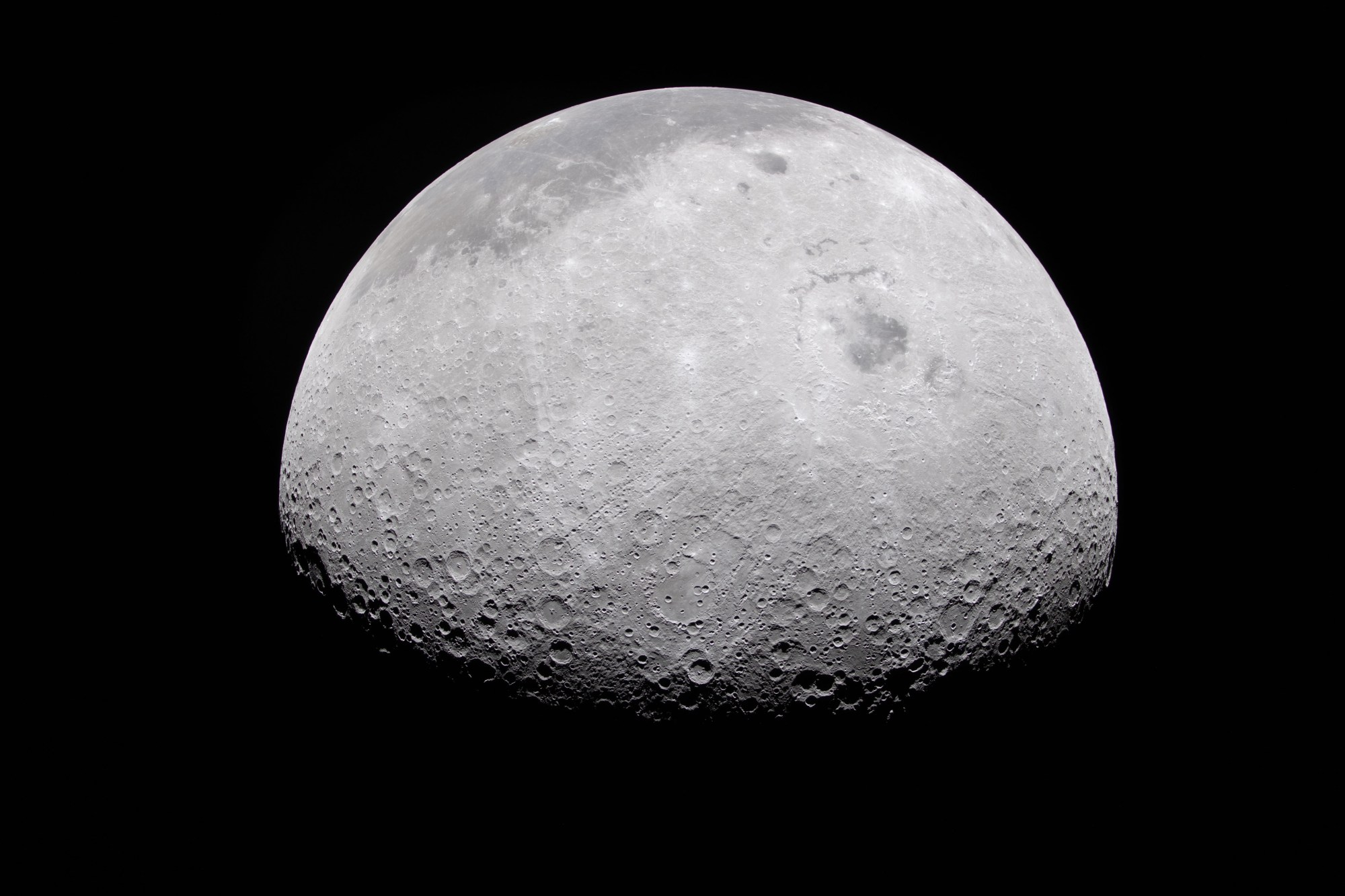
When a large object strikes the Moon at high speed, it creates a fresh crater and ejects lunar dust and rocks over a wide area. Studying these changes helps scientists better understand the physical properties of the Moon’s surface and the mechanics of impact events.
The findings could improve existing models of crater formation and provide new information about the composition of lunar soil beneath the surface.
Lunar Reconnaissance Orbiter Will Play a Key Role
NASA’s Lunar Reconnaissance Orbiter is expected to play the central role in documenting the impact.
The spacecraft continuously maps the Moon with high-resolution cameras, making it one of the best tools available for identifying newly formed craters.
Scientists plan to compare before-and-after images to determine the exact location of the impact and measure any changes to the surrounding landscape. If lighting conditions are favorable, NASA could release new images showing the crater created by the collision.
A Growing Concern Over Space Debris
The incident also highlights the increasing challenge of managing space debris.
Over the decades, hundreds of rocket stages, satellites, and spacecraft components have been left in space after completing their missions. While many eventually re-enter Earth’s atmosphere and burn up, others remain in orbit or follow unpredictable trajectories.
Experts say that understanding the behavior of abandoned spacecraft is becoming increasingly important as more countries and private companies launch missions beyond Earth orbit.
The Moon, once considered largely isolated from human activity, is now becoming an active destination for scientific and commercial exploration, making debris management more relevant than ever.
Valuable Data for Future Moon Missions
NASA and its international partners are preparing for a new era of lunar exploration through the Artemis program and other robotic missions.
Learning how large artificial objects interact with the lunar surface can help engineers improve landing systems, habitat planning, and surface operations.
The impact may also provide valuable information about how lunar dust behaves after high-energy collisions, which is important for protecting future astronauts, equipment, and scientific instruments.
Not the First Human-Made Object to Reach the Moon
This is not the first time an abandoned rocket stage has collided with the Moon.
Previous missions have also resulted in intentional or accidental impacts, some of which have been used by scientists to study seismic activity and crater formation.
However, each new impact offers fresh scientific data because every collision occurs under different conditions, including varying impact angles, speeds, and lunar terrain.
Scientists Await New Images
Astronomers around the world are now waiting for NASA to identify the exact impact site and release updated imagery from the Lunar Reconnaissance Orbiter.
The analysis is expected to reveal how large the crater is, how much material was ejected, and whether the collision exposed previously hidden layers beneath the Moon’s surface.
Such discoveries could contribute to a better understanding of the Moon’s geological history and improve planning for future exploration missions.
NASA’s Next Steps
NASA says it will continue analyzing orbital data and imagery collected by the Lunar Reconnaissance Orbiter to locate and study the impact area.
If a newly formed crater is successfully identified, scientists will examine its dimensions, the surrounding debris field, and any surface changes caused by the collision. The results could enhance knowledge of lunar geology while also improving the understanding of how human-made space objects behave after completing their missions.
The SpaceX rocket’s journey may have ended with a crash on the Moon, but for scientists, the event marks the beginning of an important new chapter in studying lunar impacts, space debris, and the future of deep-space exploration.