

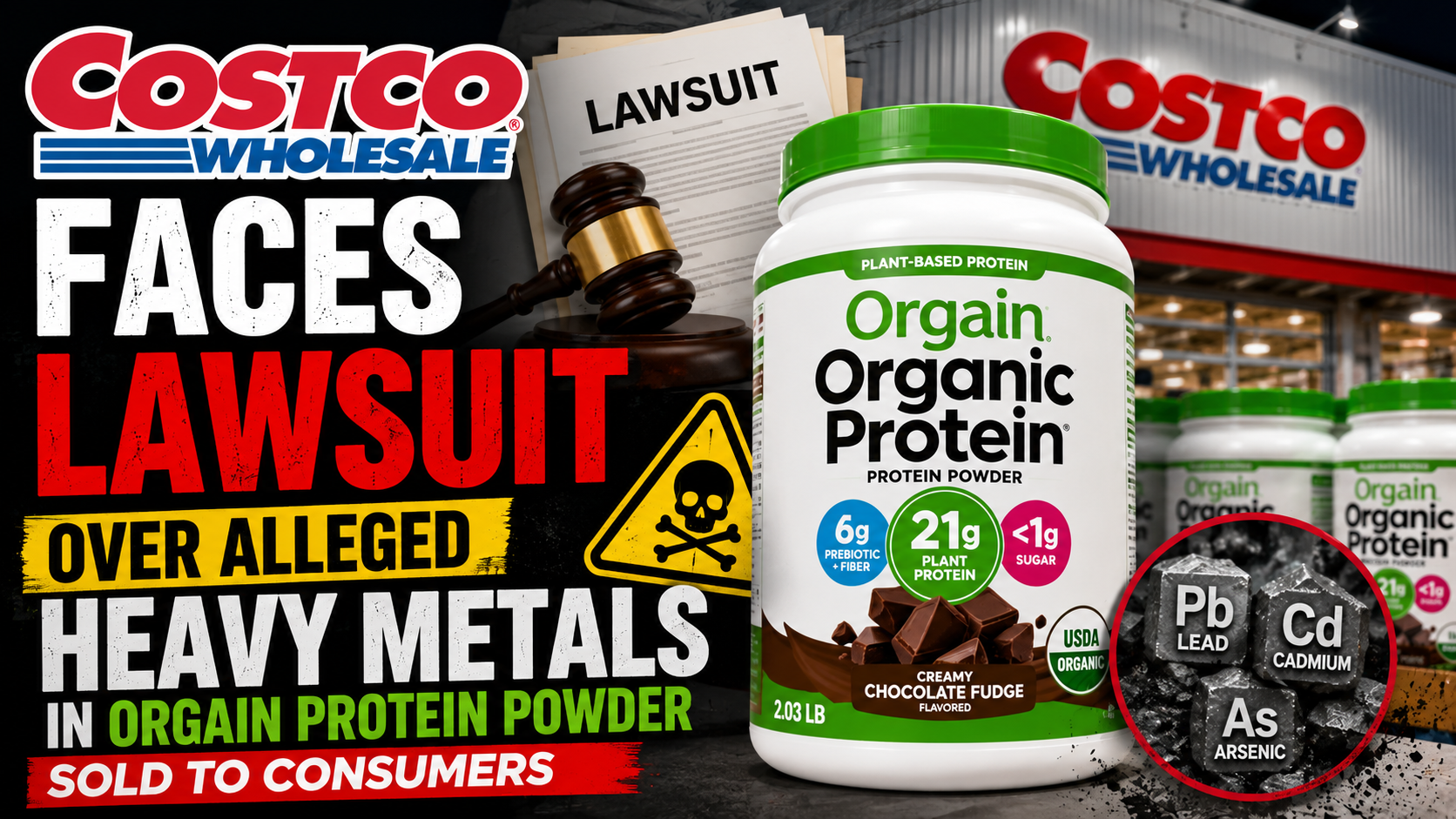
Class-action complaint claims retailer failed to warn consumers about lead, cadmium and arsenic; no recall announced
Seattle, July 9, 2026: Costco Wholesale Corporation is facing a proposed class-action lawsuit in the United States after consumers alleged that the retailer sold Orgain plant-based protein powder containing dangerous levels of heavy metals without adequately warning customers. The lawsuit claims that products marketed as “clean,” “high quality,” and “nutritious” contained lead, cadmium and arsenic at levels that plaintiffs say pose potential health risks.
The complaint was filed in the U.S. District Court for the Western District of Washington and seeks damages as well as an injunction to stop the sale of the products identified in the lawsuit. The legal action comes amid growing scrutiny of heavy metal contamination in dietary supplements and plant-based protein products.
Importantly, the allegations remain unproven in court, and no product recall has been announced by U.S. regulators or Costco as of publication.
What the lawsuit alleges
According to the complaint, Costco continued selling Orgain Organic Plant-Based Protein Powder while marketing the products as healthy nutritional supplements despite allegedly knowing—or having reason to know—that they contained elevated concentrations of toxic heavy metals.
The plaintiffs argue that consumers purchased the products believing they met high safety standards because of Costco’s reputation for quality assurance and the marketing language used on product packaging and promotional materials.
The lawsuit specifically alleges that laboratory testing found measurable amounts of:
- Lead
- Cadmium
- Arsenic
The complaint claims some of the reported concentrations exceeded recognized safety thresholds referenced by the plaintiffs. Consumers say they would not have purchased the products—or would have paid less for them—had they been informed of the alleged contamination.
Laboratory testing cited in the complaint
Attorneys representing the plaintiffs say their case relies on independent laboratory testing as well as previous investigations into heavy metals in protein supplements.
According to the legal filing and the accompanying press release issued by Hagens Berman, testing allegedly detected:
- Lead levels of up to 67 parts per billion (ppb)
- Cadmium levels as high as 70.3 ppb
- Arsenic levels reaching 19.8 ppb
The plaintiffs contend these findings demonstrate that the products failed to meet consumer expectations regarding safety and quality.
The lawsuit also references previous testing and reports conducted by organizations such as Consumer Reports and the Clean Label Project, which have previously examined heavy metal levels in various protein powders available in the U.S. market.
Why heavy metals are a concern
Lead, cadmium and arsenic are naturally occurring elements that can enter food products through contaminated soil, water and agricultural processes. While trace amounts may occur naturally in certain foods, prolonged exposure to elevated levels can pose health risks.
According to public health authorities, excessive exposure to these metals has been associated with:
- Neurological damage
- Kidney problems
- Cardiovascular disease
- Developmental issues in children
- Increased long-term cancer risk for certain contaminants
The lawsuit argues that consumers who regularly consume protein powders as part of their daily diet may face repeated exposure if contamination exists at the levels alleged.
However, determining whether a product presents a health risk depends on multiple factors, including concentration, serving size, frequency of consumption and applicable regulatory standards. These issues are likely to become central questions during the litigation.
Attorney representing consumers speaks out
Steve Berman, managing partner of Hagens Berman and one of the attorneys representing the plaintiffs, said the lawsuit focuses on consumers who intentionally purchase premium nutritional products believing they are safe.
According to the firm’s statement, Berman said health-conscious consumers trusted Costco’s quality standards and unknowingly consumed products allegedly containing heavy metals while attempting to improve their health.

Costco and Orgain
At the time covered by available reports, Costco had not publicly admitted any wrongdoing regarding the allegations.
Likewise, reports indicated that Orgain had not publicly responded in detail to the newly filed lawsuit at the time the complaint became public. Any responses from the companies are expected to emerge as court proceedings continue.
Because the litigation is in its early stages, neither Costco nor Orgain has been found liable, and the allegations remain claims made by the plaintiffs.
No recall announced
Despite the lawsuit, there has been no recall of the Orgain protein powder products identified in the complaint.
The U.S. Food and Drug Administration (FDA) had not announced enforcement action related to the products at the time of publication based on the available reporting.
Consumers who currently possess the products should monitor official announcements from regulators and manufacturers rather than relying solely on social media discussions or unverified online claims.
Growing scrutiny of protein supplements
The Costco lawsuit reflects broader concerns surrounding heavy metal contamination in dietary supplements, particularly plant-based protein powders.
Previous independent testing by consumer organizations has found varying levels of heavy metals in several protein powder brands. Experts note that plant ingredients can naturally absorb trace metals from soil during cultivation, although acceptable exposure limits and health implications remain subjects of scientific and regulatory evaluation.
Industry experts generally recommend that manufacturers conduct rigorous quality testing and provide transparent information regarding product safety, particularly for supplements marketed toward consumers who use them daily.
What happens next
The proposed class action will now proceed through the U.S. legal system, where Costco will have the opportunity to respond to the allegations.
If the court certifies the lawsuit as a class action, additional consumers who purchased the products may eventually be included in the case.
The plaintiffs are seeking financial compensation, restitution for consumers and a court order requiring changes to the marketing and sale of the products identified in the complaint.
Whether the allegations are ultimately substantiated will depend on evidence presented during litigation, including laboratory data, regulatory standards and expert testimony.
Until then, the lawsuit represents allegations rather than established findings of fact.