

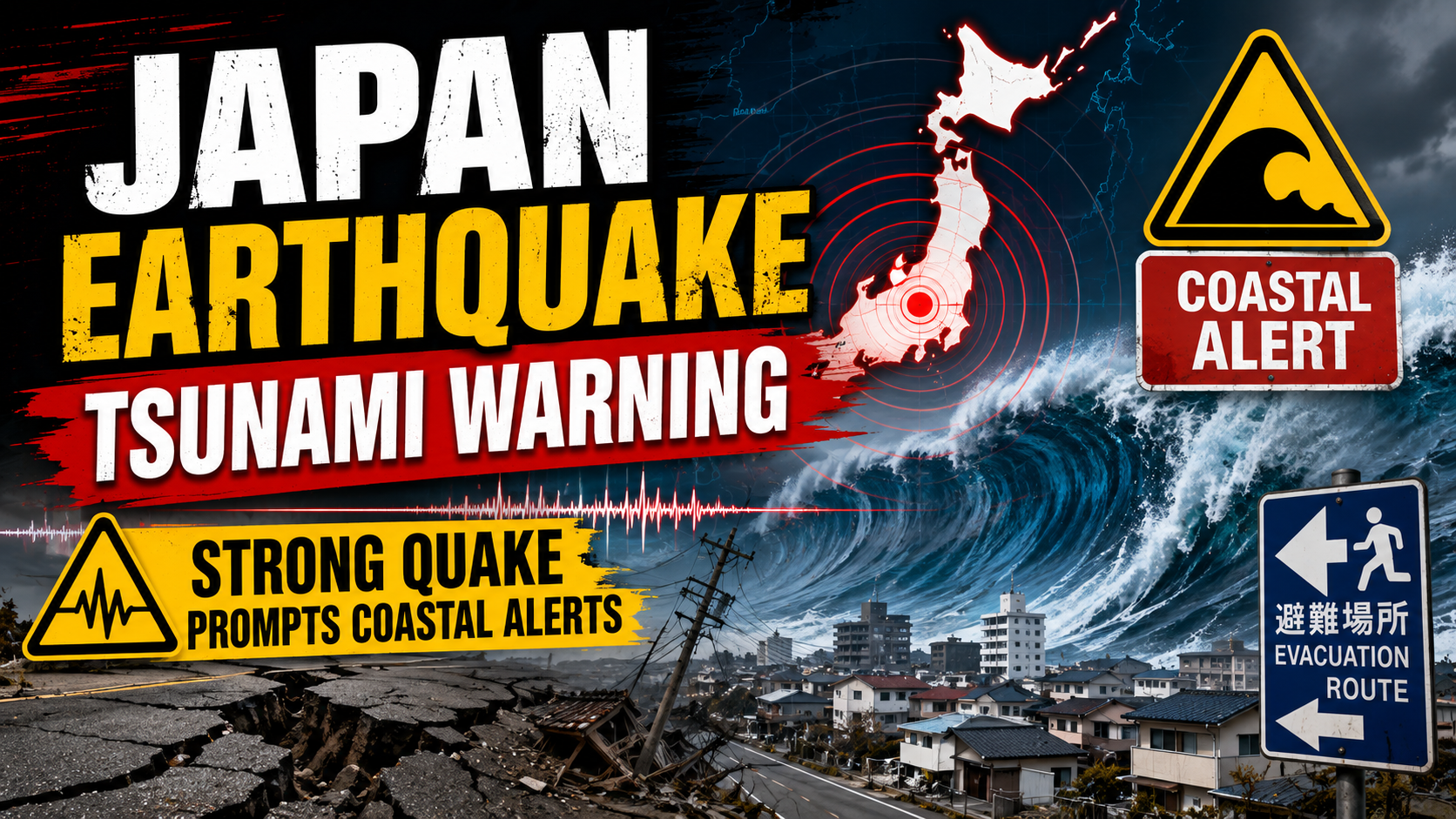
A powerful earthquake struck Japan on Wednesday, July 29, 2026, prompting authorities to issue tsunami warnings for several coastal areas. The strong tremor was felt across multiple regions, leading emergency officials to urge residents in vulnerable coastal communities to move to higher ground. Initial reports indicate that several people were injured, while rescue and damage assessment operations remain underway.
Tsunami Warning Issued After Powerful Earthquake
Japan’s Meteorological Agency (JMA) activated tsunami alerts shortly after the earthquake, warning that dangerous waves could reach parts of the country’s Pacific coastline.
Authorities advised residents to stay away from beaches, ports, and low-lying coastal areas until the warning is lifted. Emergency broadcasts were sent through television, radio, and mobile alert systems as officials monitored sea-level changes.
Strong Tremors Felt Across Multiple Regions
The earthquake was felt in several prefectures, causing buildings to shake and prompting thousands of people to evacuate offices, homes, and public facilities.
Emergency services were immediately deployed to inspect damaged infrastructure and assess the overall impact of the quake. Transportation officials also began safety inspections of rail networks and highways.

Several People Injured, Rescue Operations Continue
According to initial reports, multiple people sustained injuries during the earthquake. However, authorities have not yet released a final casualty count as rescue teams continue searching affected areas.
Firefighters, police officers, medical teams, and disaster response personnel have been deployed to assist residents and provide emergency medical care where needed.
Rescue Teams Respond to Reports of Trapped People
Emergency responders launched rescue efforts after reports emerged that people were trapped inside damaged buildings, including commercial structures.
Search-and-rescue teams are working to safely evacuate those affected while engineers inspect buildings for structural damage before allowing access.
Officials said protecting lives remains the government’s top priority as rescue operations continue.
Government Urges Public to Follow Official Instructions
Japanese authorities have urged residents not to rely on rumors or unverified social media posts. Instead, they are being asked to follow updates issued by the Japan Meteorological Agency and local governments.
Emergency shelters have been prepared in areas where evacuations may become necessary, and officials remain on high alert in case of aftershocks.
Japan’s Disaster Preparedness Put to the Test Again
Japan is one of the world’s most earthquake-prone countries due to its location along the Pacific Ring of Fire. The country has developed one of the world’s most advanced earthquake and tsunami warning systems.
Experts say these early warning systems play a critical role in reducing casualties by giving residents valuable time to move to safer locations before tsunami waves arrive.
Videos Show People Evacuating Buildings
Videos shared by international media captured the moment buildings shook and people rushed outdoors following the earthquake.
Witnesses described the shaking as intense, with many saying the tremors lasted several seconds. Authorities continue verifying reports and assessing damage across the affected regions.
Transport and Infrastructure Under Inspection
Following the earthquake, railway operators and transportation agencies carried out precautionary inspections of rail lines, bridges, highways, and other critical infrastructure.
Some services experienced temporary disruptions while engineers confirmed that transportation networks remained safe for public use.
Latest Situation
As of Wednesday afternoon, tsunami warnings remained in effect for parts of Japan’s coastline, with authorities continuing to monitor ocean conditions.
Emergency response teams remain active across the affected areas, while officials continue evaluating the extent of the damage. Authorities have once again urged residents to avoid coastal areas, remain alert for possible aftershocks, and follow official evacuation instructions until the situation is declared safe.