

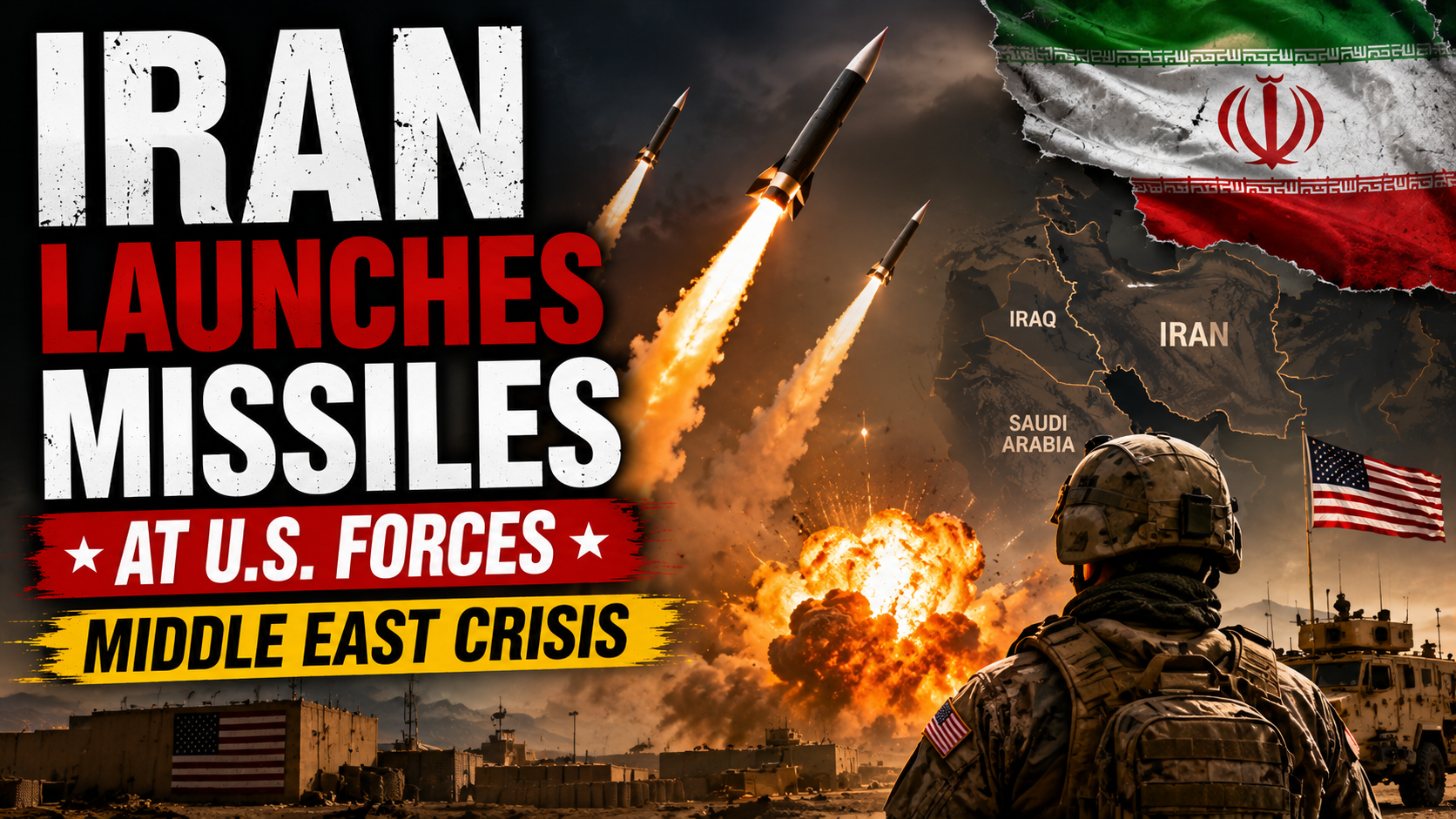
The Middle East witnessed another sharp escalation on Wednesday after Iran launched ballistic missiles targeting U.S. military forces in the region. According to U.S. officials, all incoming missiles were successfully intercepted, and no casualties or significant damage have been reported. The attack comes at a time when hopes for easing tensions between Washington and Tehran had begun to emerge, raising fresh concerns about regional stability.
U.S. Military Says All Missiles Were Intercepted
The U.S. Central Command (CENTCOM) confirmed that American air defense systems successfully intercepted every ballistic missile launched during the attack. Military officials said U.S. personnel stationed across the region remain on high alert and are prepared to respond to any additional threats.
Early assessments indicate that no American service members were injured, and no military facilities suffered major damage. Authorities continue to monitor the situation as more intelligence becomes available.

Jordan Also Intercepts Incoming Missiles
Jordan’s military reported that its air defense systems intercepted several missiles that entered its airspace during the incident. The country said the interceptions were carried out to protect its territory and civilians.
Meanwhile, Iran’s state-run news agency IRNA claimed that the missile operation targeted American military positions in the region. However, those claims have not been independently verified.
U.S. and Saudi Arabia Respond with Military Action
Following the missile attack, the United States and Saudi Arabia reportedly carried out strikes against Iran-backed militia positions in Iraq. Officials said the operations were aimed at preventing further attacks on American forces and critical regional infrastructure.
U.S. authorities warned that any future attacks against American troops or allied facilities could trigger additional military responses, underscoring the fragile security situation in the Middle East.

Diplomatic Efforts Face a Major Setback
The latest missile strike comes despite recent indications that diplomatic efforts could reduce tensions between Iran and the United States. President Donald Trump had previously suggested allowing room for negotiations, but Wednesday’s attack has complicated those efforts.
Security analysts believe the incident could significantly delay any progress toward de-escalation, as both sides assess their next moves.
Global Markets React to Rising Tensions
The renewed military confrontation has also affected global financial markets. Oil prices moved higher as investors reacted to concerns over potential disruptions in energy supplies from the Middle East.

The Strait of Hormuz remains one of the world’s most important energy transit routes, and any military escalation involving Iran raises fears of supply chain disruptions that could impact global crude oil markets.
What Happens Next?
U.S. officials say they are closely monitoring developments and remain prepared for any further military activity. Iran has defended its actions, while Washington has emphasized that it will protect its personnel and interests in the region.
With diplomatic efforts under renewed pressure and military forces remaining on high alert, the latest exchange has once again highlighted the volatility of the Middle East. Whether the crisis moves toward de-escalation or further confrontation will likely depend on the actions taken by both governments in the coming days.