

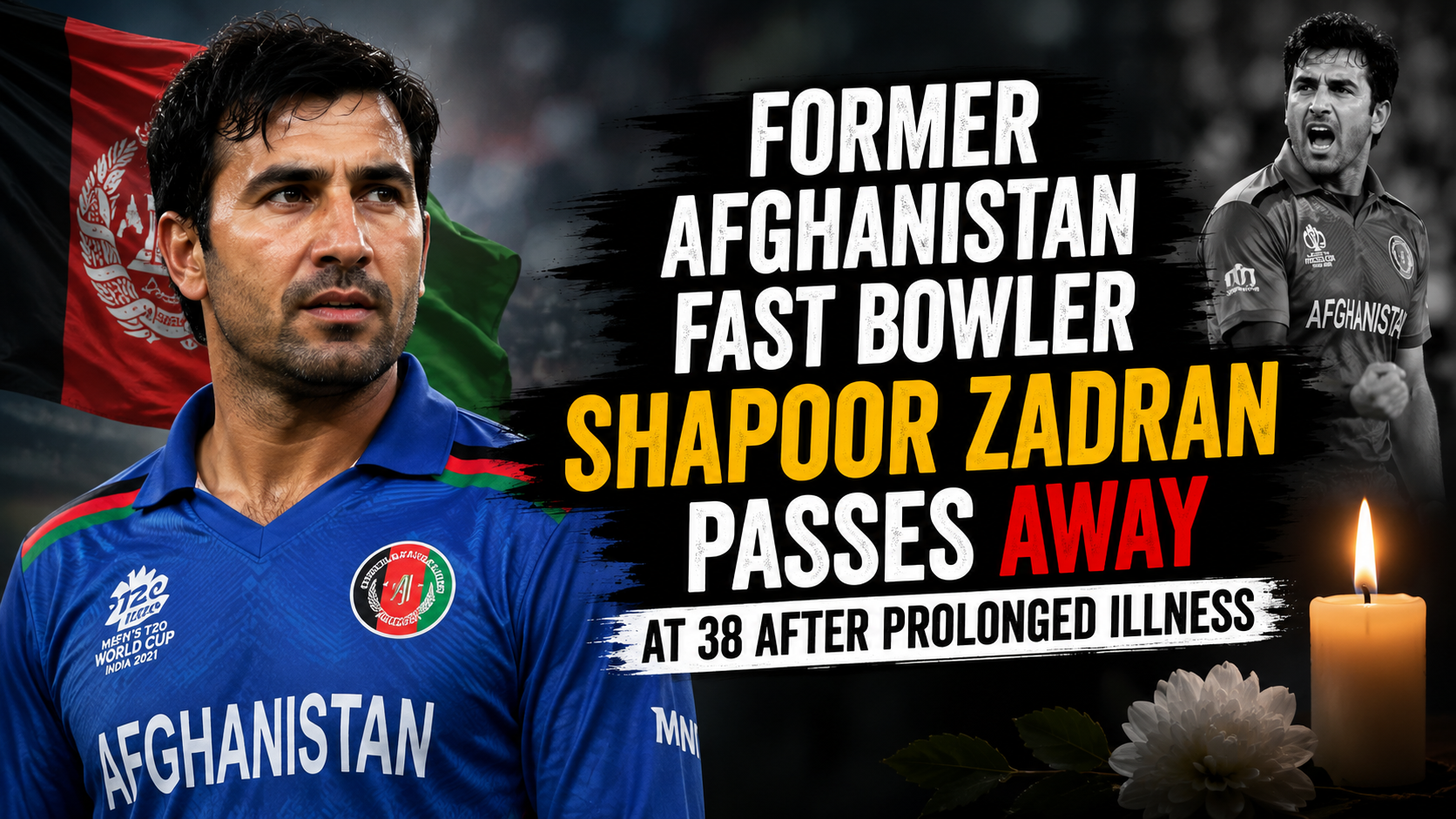
Shapoor Zadran, one of the foundation stones of Afghanistan’s rise in international cricket, died on Tuesday at the age of 38 in a hospital in Delhi after battling a rare and life-threatening condition known as Hemophagocytic Lymphohistiocytosis (HLH). He would have turned 39 on Wednesday.
The Afghanistan Cricket Board (ACB) confirmed the news with a heartfelt statement on social media, describing Zadran as a “foundation-laying figure” whose dedication helped elevate Afghan cricket on the global stage.
“With profound grief and deep sorrow, the Afghanistan Cricket Board mourns the passing of former Afghanistan fast bowler Shapoor Zadran,” the ACB posted. “Shapoor Zadran was one of the foundation-laying figures of Afghanistan cricket, whose dedication, passion, and unwavering commitment played a vital role in the rise and development of the game in our country.”
Zadran had been receiving treatment in Greater Noida near Delhi. According to family members and reports, he first fell ill late last year in Afghanistan. Doctors advised him to seek specialised care in India. His condition initially showed some improvement, allowing discharge, but it deteriorated again. He was readmitted after developing high fever, testing positive for dengue, and experiencing a sharp drop in red blood cell count. Further tests, including a bone marrow examination, confirmed Stage 4 HLH.

What is HLH?
Hemophagocytic Lymphohistiocytosis is a rare hyperinflammatory syndrome where the immune system becomes dangerously overactive, attacking healthy tissues and organs instead of fighting infections. It can be triggered by infections, autoimmune diseases, or cancers, and is often life-threatening without prompt treatment. Symptoms include persistent fever, extreme fatigue, enlarged organs, low blood counts, and jaundice. Diagnosis typically involves blood tests, ferritin levels, and bone marrow studies. Treatment may include corticosteroids, chemotherapy, immunotherapy, and, in severe cases, stem cell transplants.
Zadran’s younger brother, Ghamai Zadran, confirmed the news of his passing. Tributes poured in from the cricket community, with former teammates Mohammad Nabi and Rashid Khan among those who had visited him during his hospitalisation in May.
A Pioneer of Afghan Cricket
Born on July 8, 1987, Shapoor Zadran was a tall, lanky left-arm fast bowler known for his pace, aggression, and distinctive long hair flowing as he charged in. He represented Afghanistan in 80 international matches between 2009 and 2020 — 44 ODIs and 36 T20Is — claiming 80 wickets in total.
He made an immediate impact on his ODI debut against the Netherlands with impressive figures of 4/24. His breakout moment came during the 2015 ICC Cricket World Cup in Australia and New Zealand, where he emerged as Afghanistan’s leading wicket-taker with 10 scalps. A standout performance was his 4/38 against Scotland, followed by an unbeaten 12 that helped secure a historic win — an image of his jubilant celebration sprinting across the ground remains etched in Afghan cricket folklore.
Inspired by his idol Shoaib Akhtar, Zadran had earlier moved to Pakistan to pursue his cricketing dreams before returning to represent his nation. He was part of Afghanistan’s journey from associate status to competing regularly in World Cups, embodying the fighting spirit of a team that defied odds.
The ACB highlighted his broader legacy: “Beyond his achievements on the field, Shapoor Zadran was a true source of inspiration for many young Afghan cricketers and for cricket followers across the world. His fighting spirit, determination, and love for the game gave hope to many and encouraged a generation to dream bigger.”
Tributes and Lasting Impact
Zadran’s death has been deeply felt across the cricketing fraternity. He is remembered not just for his on-field contributions but for his role in laying the groundwork during Afghanistan cricket’s formative years. His perseverance mirrored the resilience of a nation emerging on the global sporting map amid challenges.
As Afghanistan cricket continues to grow — producing stars like Rashid Khan and others — Zadran’s contributions as one of the early trailblazers will remain a significant chapter in its history.
The loss serves as a poignant reminder of the fragility of life and the human stories behind sporting achievements. While his physical presence is no more, his legacy of courage and commitment will continue to inspire aspiring cricketers in Afghanistan and beyond.