

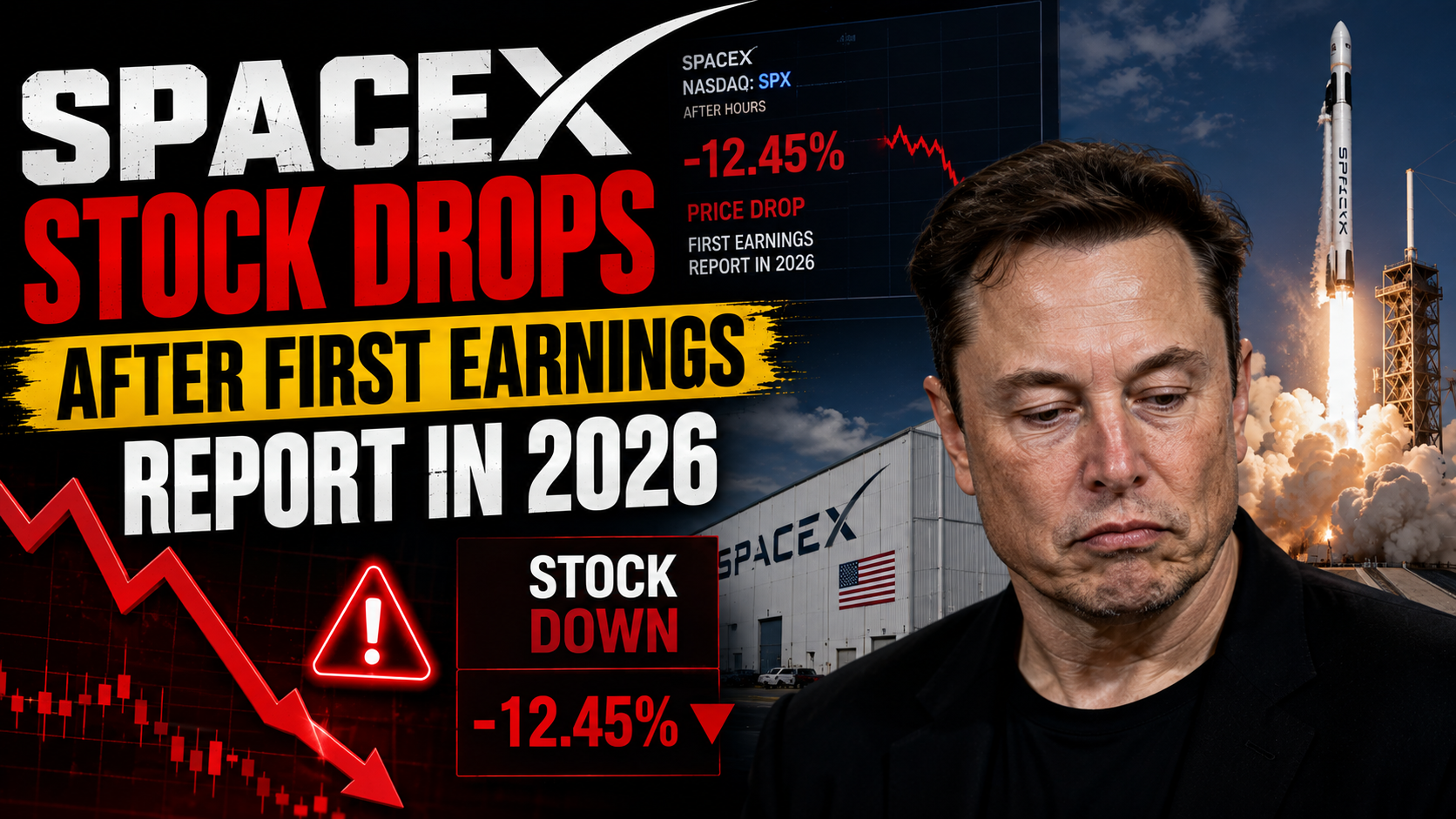
SpaceX stock came under pressure after the company released its first-ever quarterly earnings report as a publicly traded company. While the aerospace giant reported revenue that exceeded Wall Street expectations, investors reacted negatively to its aggressive spending on artificial intelligence infrastructure and higher capital expenditures. The earnings announcement was made after the market closed, and the stock declined sharply in after-hours trading.
Revenue Beats Expectations, But Profitability Remains a Concern
SpaceX reported second-quarter revenue of $7.8 billion, representing a significant year-over-year increase and beating analyst estimates. The strong performance was driven primarily by continued growth in its Starlink satellite internet business and expanding AI-related operations.
Despite the impressive revenue growth, the company remained unprofitable during the quarter as it continued investing heavily in long-term projects. The higher-than-expected capital spending weighed on investor sentiment immediately after the earnings release.

Heavy AI Investment Becomes the Market’s Biggest Concern
The biggest takeaway from SpaceX’s earnings report was its aggressive investment in artificial intelligence infrastructure.
The company significantly increased spending on AI data centers, computing infrastructure, Starship development, and Starlink satellite expansion. While management believes these investments will drive long-term growth, investors were concerned about the impact on profitability and free cash flow.
Analysts noted that AI-related capital expenditure exceeded market expectations, becoming one of the primary reasons behind the stock’s decline.
Starlink Continues to Drive Business Growth
Starlink remained SpaceX’s strongest business segment during the quarter.
The satellite internet service continued expanding its global subscriber base while enterprise and government contracts contributed to higher revenue. The company said its satellite and AI businesses were major growth engines during the quarter, helping overall revenue nearly double from a year earlier.

Elon Musk Outlines Long-Term Vision
During the earnings call, CEO Elon Musk reiterated the company’s ambitious long-term plans.
Musk said SpaceX aims to build one of the world’s largest AI infrastructure platforms alongside its space transportation business. He also projected that annual revenue could eventually reach $1 trillion, supported by Starlink, AI services, and future space-based computing initiatives.
However, achieving those goals will require continued large-scale investments over the coming years.
Why Did SpaceX Stock Fall?
Although the company delivered stronger-than-expected revenue, investors focused more on rising costs than on sales growth.
Key concerns included:
- Higher-than-expected AI capital expenditure
- Continued net losses
- Negative free cash flow
- Significant spending on Starship and satellite expansion
- Questions about when AI investments will generate sustainable profits
These concerns outweighed the positive revenue numbers, leading to a sharp decline in SpaceX shares following the earnings announcement.
What Investors Will Watch Next
Investors are now expected to closely monitor whether SpaceX can translate its massive AI and infrastructure investments into stronger earnings over the coming quarters.
The market will also watch the growth of Starlink subscribers, progress on Starship development, AI revenue expansion, and improvements in profitability and cash flow. With heavy investment continuing across multiple business segments, future earnings reports will play a crucial role in shaping investor confidence.